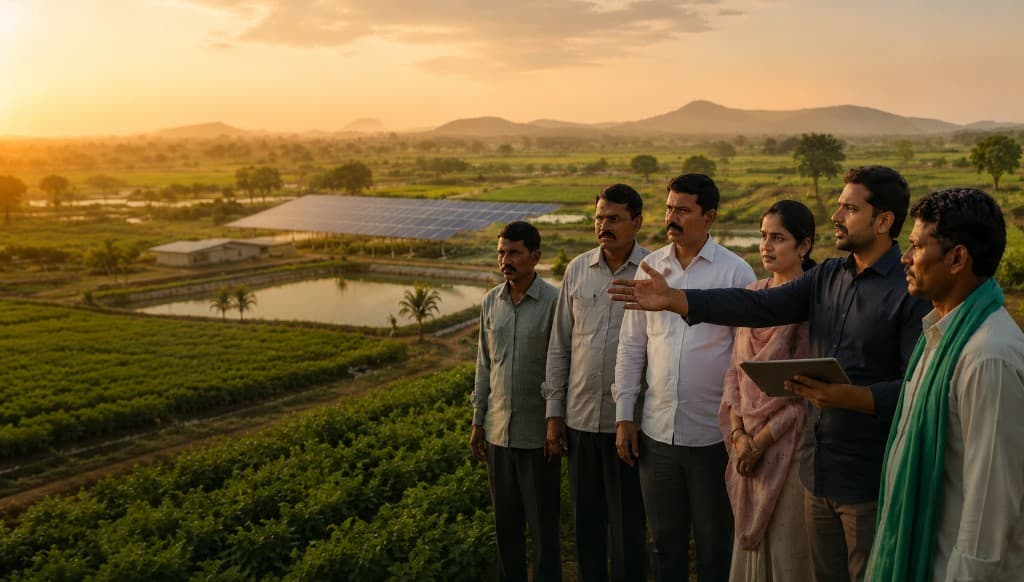
Regenerating Land. Building Rural Prosperity.
A first-of-its-kind institutional framework for hyper-local economic resilience, transforming degraded landscapes into thriving, high-yield agricultural hubs.
Long-horizon ambition
Long-term replication horizon
At full 60,000-acre scale
Define metric + reporting period
Digital operations rollout
Where we are today
Business Standard, Jun 2026
NITI Aayog Frontier Tech, Jun 2026
NITI Aayog, Jun 2026
Business Standard, Jun 2026
Reported figures are drawn from independent media coverage and are subject to internal verification.
The land is coming back. So are its people.
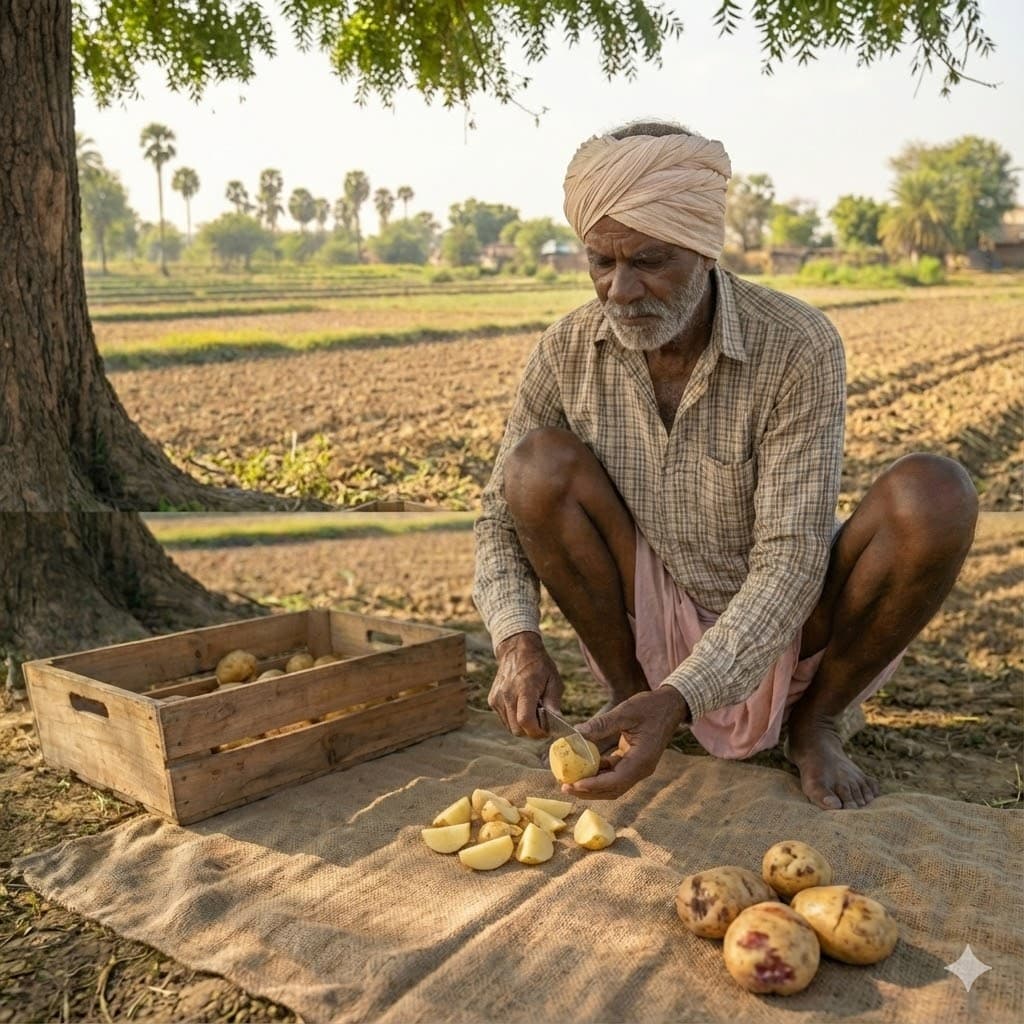
For decades, the story of rural Chittoor was a story of leaving — land shrinking to one or two acres, streets emptying, families migrating to cities for work. Project Chittoor is reversing that current. As independent media has reported, families who left for city jobs are now returning home, drawn back not by sentiment but by sustained village income. More are expected to follow.
This is what regeneration means here: not just soil and water restored, but livelihoods, dignity and the village itself.
As reported by Business Standard, June 2026.
A rural economy designed as one system.
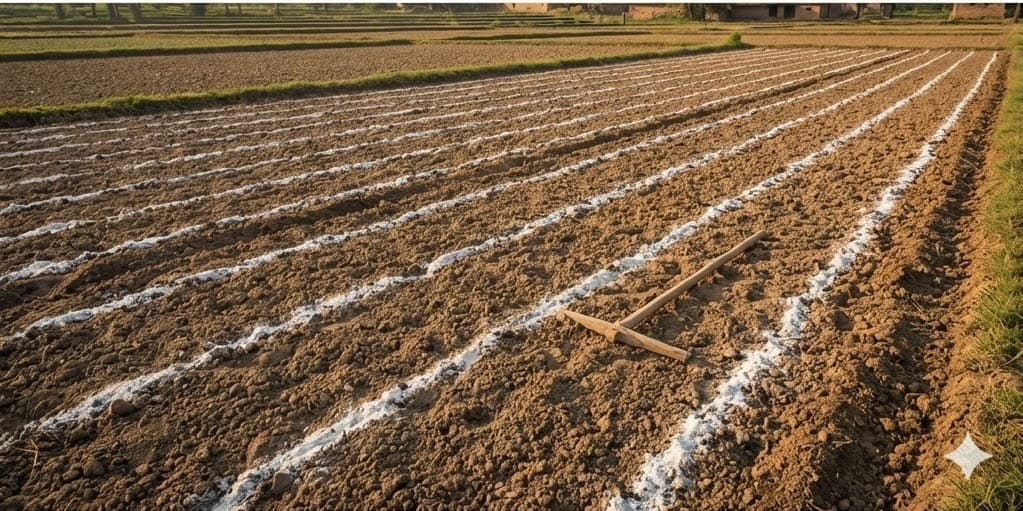
Project Chittoor rejects fragmented intervention. Instead, one framework binds land, water, energy, livestock, forestry and markets into a single regenerative engine — where the output of every system becomes the input of another. Livestock returns organic matter to the soil. Elevated solar panels shade crops, cut evaporation and power cold storage, pumps and packhouses. Tree belts hold water in the ground and carbon in the air. Nothing — no hour of labour, no drop of water, no joule of energy — is wasted.
The result is land that grows more productive every season, and a rural balance sheet with multiple engines of income instead of one fragile harvest.
Integrated Processing Hubs
Centralized tech stacks for post-harvest management.
Closed-Loop Resources
Zero-waste protocols for energy and water infrastructure.
Regenerative by Design
Soil, water and air improve as a direct output of operations, not a side programme.
Proof, not promises.
Every figure below is drawn from independent coverage of the project and carries its source.
Business Standard, Jun 2026
Business Standard, Jun 2026
Business Standard, Jun 2026
Every figure above is drawn from independent coverage of the project and carries its source. When we publish our own dashboard numbers, they will carry definitions, dates and methodology.
Reported figures are drawn from independent media coverage and are subject to internal verification.
Built in Chittoor. Designed for replication.
We are building more than a project; we are creating a blueprint. Our institutional framework is designed to be ported to any geography with rural potential.
Scalable Framework
Modular infrastructure that adapts to local soil conditions, crop profiles, and water tables while maintaining system integrity.
Institutional Trust
A governance model that aligns village-level entrepreneurs with institutional capital and state initiatives.
Data-Led Governance
Real-time monitoring of soil health, income growth, and carbon sequestration across every hectare.
Rural transformation requires an ecosystem.
Join us in redefining the future of integrated agriculture and rural prosperity. We are seeking institutional partners for the next phase of expansion.
“Project Chittoor is not just about farming; it is about rewriting the social contract between industrial efficiency and ecological restoration.”
— Executive Leadership, Atria Group