01
Systemic integration
Every system feeds another — nothing works in isolation.
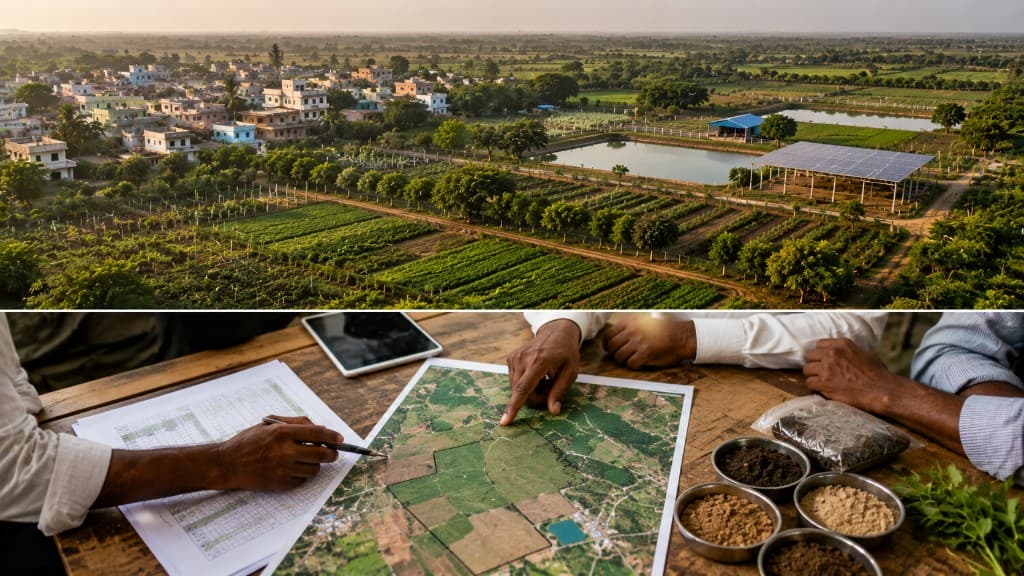
Moving beyond traditional aid toward scalable, industrial-grade rural transformation. We are architecting an ecosystem where heritage and modernity coexist to drive lasting institutional growth.
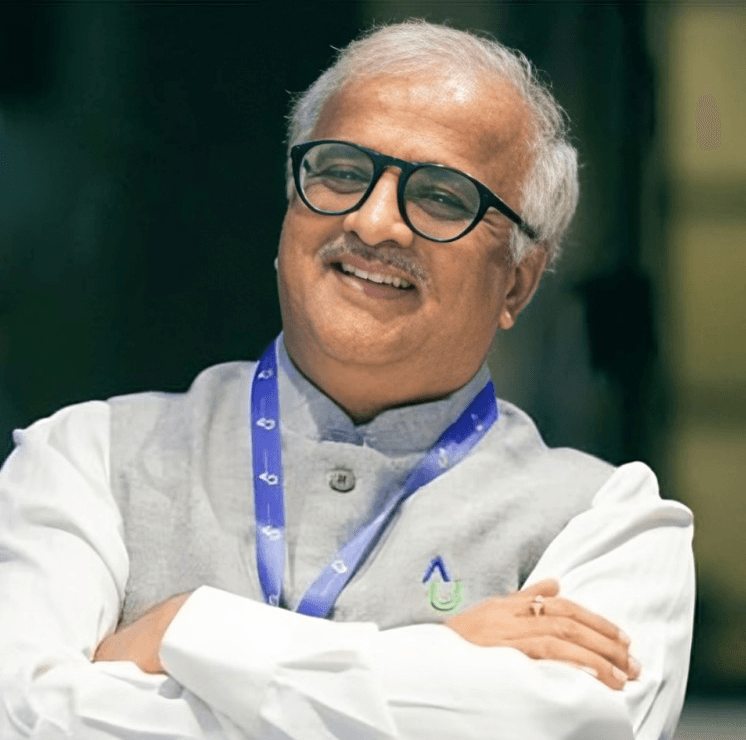
The Leadership Stewardship, Atria Group
Project Chittoor began when Dr. Sunder Raju returned to his ancestral village and found streets quieter than memory: families still owned their land, but most holdings had shrunk to an acre or two, leased out seasonally or lying fallow, while their owners worked in distant cities. An agroforest raised by a family member on similar land posed a question that would not leave: if one plot could be regenerated, why not a village? Why not a district?
The answer became a framework — one that lets hundreds of small holdings act with the scale of a single large estate, without a single family surrendering ownership.
A self-sustaining rural India where every village is a high-yield economic hub, empowered by technology and rooted in ecological balance.
To deploy integrated rural infrastructure that preserves land ownership while unlocking institutional-scale efficiency, traceability, and prosperity.
How we operate
Eight commitments that govern every acre, every rupee and every decision.
Every system feeds another — nothing works in isolation.
Governance that aligns villages, capital and the state.
Every number defined, dated and open to scrutiny.
Codified operations built to replicate in any geography.
Waste from one sector becomes fuel for another.
Land stays with families; scale stays collective.
Decisions run on field evidence, not assumption.
Assets and soil that grow richer for decades.
Every operating decision must leave the soil, water and air better than it found them.